 VapeWholesaleHub
Merchandising Latte Ice Inside a Physical Store — Plain Language
A latte ice programme fails in predictable ways: a specification nobody wrote down, a sample nobody retained, and a lead time nobody stress tested. Here is how to close those three gaps before they cost you a container.

The Specification That Matters
Ask for the latte ice specification in the same units you intend to measure in. A metric quoted in a form you cannot verify on arrival is not a specification, it is a claim.
| Product category | Pod system |
|---|---|
| Resistance band | 1.0 - 1.2 ohm |
| Capacity tolerance | +/- 2% |
| Puff count method | Machine cycle 2s on / 18s off |
| Master carton | 200 units |
| Carton weight | 3.4 kg |
| Shelf life | 18 months |
| Storage | 15-25 C, dry, away from direct light |
Market Signals
Expect latte ice packaging requirements to keep tightening. Designs that leave room for additional labelling age better than tight layouts that need a full reprint to comply.
Traceability is moving from a nice-to-have to a requirement in several latte ice markets. Building the habit now is cheaper than retrofitting record keeping under pressure later.
Inspection Before Dispatch
Train whoever receives latte ice cartons to note anything unusual at the point of unloading. Damage discovered at the dock is a freight claim; damage discovered a week later is your problem.
Random checks are fine, but weight the sample towards the start and end of a latte ice production run. Those are where a line is most likely to drift.
- Confirm the current customs classification with your own broker.
- Keep sealed retained samples from every production batch.
- Rotate stock by batch code rather than by delivery date.
- Start with a mixed carton and let your own sell-through decide.
- Model landed cost, not ex-works price, when comparing quotes.
Getting Latte Ice to Your Warehouse
Carton dimensions for latte ice are a design decision, not a packing afterthought. A few centimetres on the master carton can change how many units fit a pallet, and that repeats on every order.
Freight is the hidden half of latte ice unit economics. A denser master carton can save more per unit than a hard negotiation on factory price, because the saving repeats on every reorder rather than once.
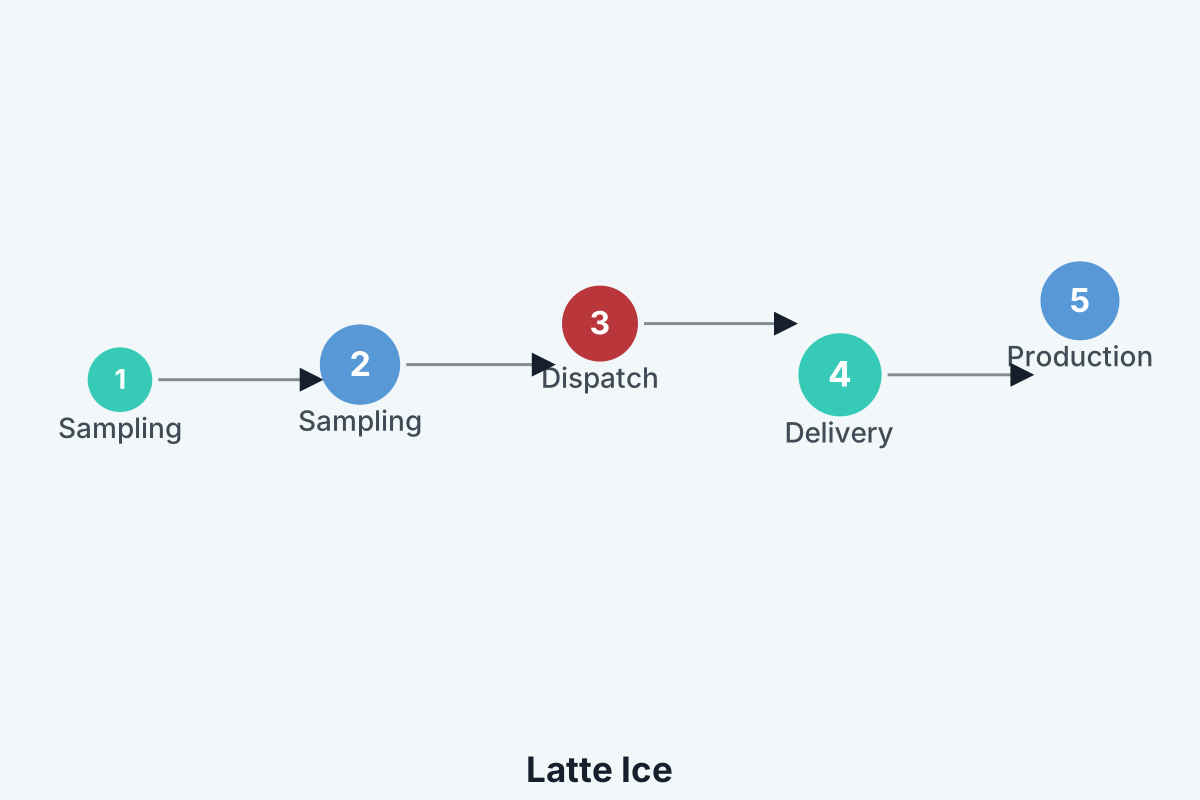
What Latte Ice Really Costs Landed
When latte ice input costs move, ask which component moved. A generic price increase hides whether you are paying for cells, packaging or simply a busy production calendar.
Hold a small latte ice buffer in your pricing model for currency movement. A few percent on a container is a real number, and it is easier to plan for than to absorb.
Indicative reference points for planning purposes: entry tier from USD 2.23 per unit at 2000 units, mid tier at USD 1.58, and volume tier at USD 0.68 for full container quantities. These figures move with specification, packaging and freight, so treat them as a shape rather than a quote.
Practical Checklist
- Start with a mixed carton and let your own sell-through decide.
- Plan the switch from air to sea freight before you need it.
- Keep sealed retained samples from every production batch.
- Ask how the factory measures puff count, then compare like with like.
- Agree the tolerance band in writing before approving artwork.
- Rotate stock by batch code rather than by delivery date.
Frequently Asked Questions
How are price changes handled on repeat orders?
{K} pricing is reviewed against input costs and volume rather than adjusted casually. Any change is confirmed in writing before the next order is scheduled, with the reason stated so you can judge it yourself.
What happens if my market changes its rules?
Regulations move, and packaging or documentation sometimes has to follow. We keep approved artwork files on hand so that a required change is a reprint rather than a redesign, which keeps the cost and delay down.
What if I only need a small first order?
That is normal and sensible. A mixed carton lets you test latte ice in your own market before committing to a production run, and the specification you approve at that stage carries through to larger orders unchanged.
How should latte ice be stored?
Cool, dry and out of direct sunlight. Heat and light are the two things that shorten shelf life fastest. Rotate stock by batch code rather than by arrival date, and keep cartons off concrete floors in humid warehouses.
Next Step
Nobody wins when a first order is too large to learn from. Start with a mixed carton, check how it moves in your own market, then scale the lines that earned the shelf space.
Related Reading
- Latte Ice Auditing Your Own Supply Chain — Plain Language
- Latte Ice OEM and ODM: Which Model Fits Your Business — the Buying Desk
- Latte Ice Mouthpiece Geometry and Comfort — New Distributors
- Latte Ice Specifications Every Buyer Should Check — Plain Language
- Latte Ice Specification Change Control — Updated for 2026
- Latte Ice Supplier Scorecard Template — Convenience Retail